
7 Sponsorship Social Media Post Examples That Actually Convert
The best sponsored posts do more than display a product. Here are seven formats that give a brand mention a reason to exist.
TL;DR
- Seven sponsored post formats, judged by what each one actually delivers rather than how it looks.
- Product seeding and challenges buy reach. Cheap per placement, unpredictable per post.
- Affiliate codes and tutorials buy attributable conversions. The formats you can measure.
- Testimonials and co-created content buy trust. Slower, more expensive, harder to fake.
- Pick the format from the objective, not from whatever is trending, and match the creator to the format before you negotiate the fee.
Sponsored posts live or die on whether the format matches what the audience came for.
The best sponsored posts do more than display a product. Placing a product mention inside a creator video doesn't create a strong campaign. A useful sponsorship social media post matches the format to audience intent, makes the paid relationship clear, preserves the creator's voice, and gives the brand a measurable next step.
That matters because sponsored content now operates as a structured channel, not an occasional add-on. Meltwater reported 3,798,505 sponsored posts in 2021, up from 3,014,687 in 2020, a 26.7% year-over-year increase in sponsored feed posts (Campaign). The practical question isn't whether creators should mention a brand. It's which creative system gives that mention a reason to exist.
The seven formats below are evaluated through the same lens: the post concept, caption and disclosure approach, creative variation, strategic advantage, execution risk, and measurement plan. That makes each example easier to adapt for real partnerships, from product seeding and affiliate content to tutorials, testimonials, challenges, and brand storytelling.
1. Product Seeding and Unboxing Sponsorship Post
An unboxing works when the audience wants to see the experience of receiving and trying something new. A makeup creator opening a skincare package, a tech reviewer testing an early-access device, or a fashion creator styling a newly seeded collection can turn packaging, first impressions, and product handling into the story.
The format depends on credible reaction, not a polished commercial. The creator should show what arrived, explain why the product is relevant, and demonstrate an initial use without pretending that a first impression proves long-term performance. A clear disclosure should appear on-screen and near the beginning of the caption, using the platform's paid-partnership tools where available. Gifting can still create a commercial relationship, so brands shouldn't rely on vague language such as “thanks for the package.”
Make the first impression useful
The caption should answer three questions quickly:
- What arrived: Name the product and the specific problem or use case it addresses.
- What happened first: Describe the creator's immediate observation without making unsupported performance promises.
- What viewers should do: Invite a comment, direct viewers to a product page, or ask them to follow a later review.
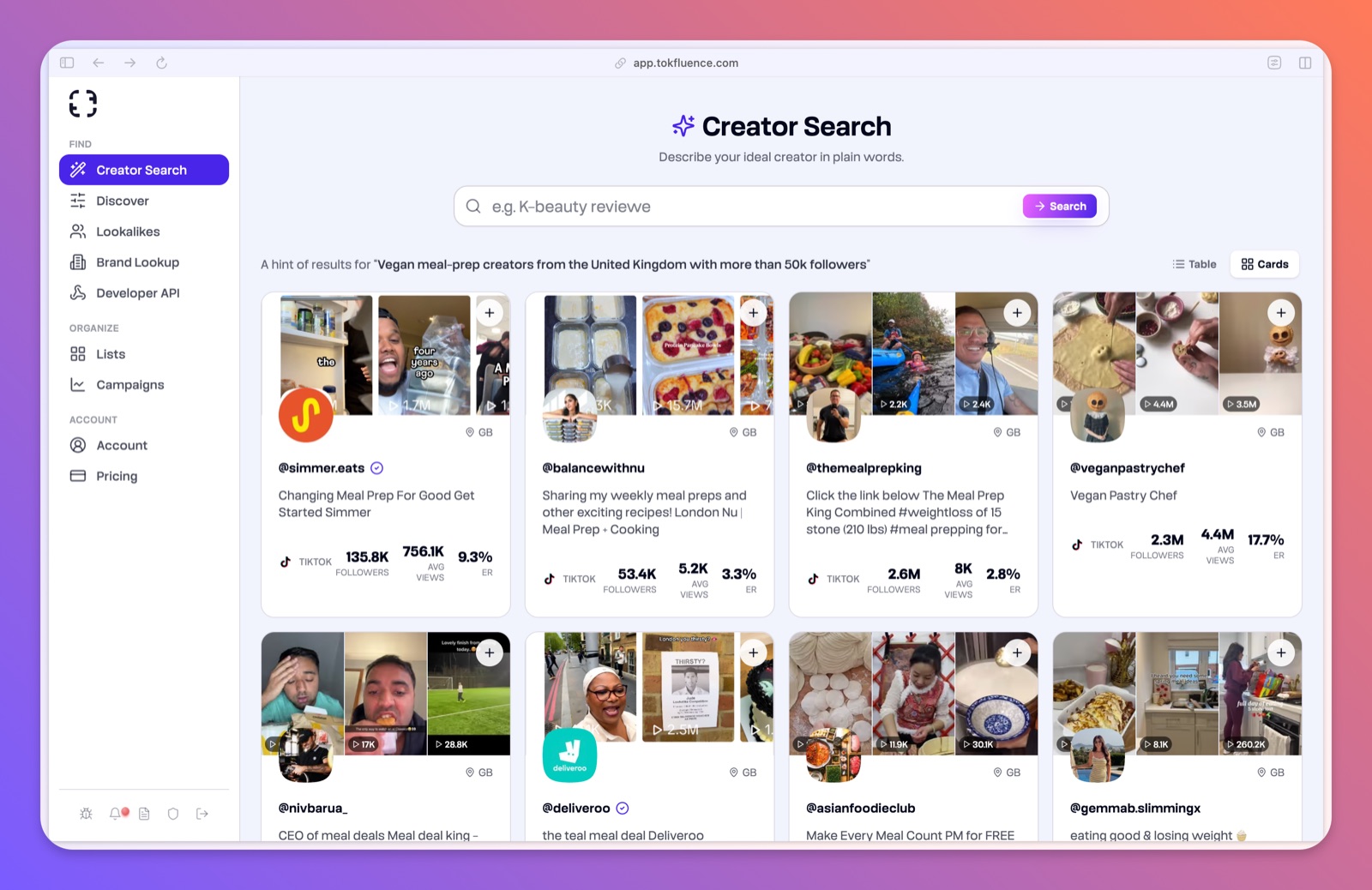
Describing the creator you want in plain words, then reading engagement rate before follower count.
Tokfluence audience analysis reports can help validate demographics, reachability, and potential fraud signals before products are sent. Posts-first discovery and filters for niche, engagement, and content relevance are more useful than choosing creators from follower count alone.
Practical rule: Give creators a delivery window, essential product facts, and disclosure requirements. Don't script the reaction.
The risk is oversampling creators who look relevant but lack audience authenticity or product fit. Build a shortlist, export it for internal review, and track each post's views and cost-per-view in Tokfluence campaign tracking. Sponsored content remains a minority of creator output. Emplifi's 2023 analysis placed sponsored Instagram content at around 7% of influencer content (Emplifi's 2023 report). That scarcity makes a genuine, well-matched unboxing more valuable than a crowded gifting feed.
2. Discount Code and Affiliate Sponsorship Post
A discount-code post succeeds only when the offer follows a credible recommendation. The creator connects a product to a clear use case, then gives viewers a code or affiliate link for a purchase, signup, or trial. A fashion retailer might frame it around a seasonal edit, a software creator around a free trial, and a fitness creator around a defined training routine.
The code should support the story, not replace it. Start with the problem or moment, explain why the creator chose the product, and introduce the offer once the recommendation has context. Repeat the code in spoken content, the caption, on-screen text, or a pinned comment when those placements fit the format.
Disclosure belongs where viewers see it before acting on the recommendation. State whether the creator is paid, earns commission, or has another commercial relationship. Keep that disclosure near the recommendation rather than placing it after extensive product claims.
Build the caption around three jobs:
- Context: Identify the problem, occasion, or task that makes the product relevant.
- Recommendation: Share the creator's selection criteria or direct experience.
- Action: Give the code or link, its destination, and any applicable conditions.
Creator fit changes the conversion path. A software educator can lead with workflow friction, while a fashion creator can organize the post around choosing an outfit. Give both the mandatory product facts and CTA requirements, then let each creator use language that matches their established style. Identical copy may improve review speed, but it can weaken trust and make posts sound interchangeable.
Tokfluence can help segment creators by audience demographics and content signals related to shopping intent. Post-level analytics support comparisons across creators, creative angles, and conversion outcomes. Teams developing affiliate-oriented partnerships can also review the Tokfluence affiliate program.
A code is a measurement device, not a creative strategy.
The central trade-off is attribution versus authenticity. Codes and direct links make performance easier to evaluate, while aggressive selling can reduce the conversational quality that made the creator valuable. Review clicks, conversions, comments, and post-level views together. A post with fewer immediate sales may still expose an audience objection or identify a message worth testing in the next iteration.
3. Brand Collaboration and Co-Created Content Sponsorship Post

Co-created content costs more because the creator's production work is part of what you are buying.
A collaboration earns its place when the creator changes the product story, not merely distributes it. A fashion brand might develop a capsule collection with a creator, a beauty company might launch an exclusive palette with a makeup artist, or a technology brand might build a review series around the creator's testing process.
Start with the audience promise and the creator's contribution. Decide what the partnership makes possible, then choose the format, pacing, visual language, and caption structure together. A creator-led launch may use a concise caption that names the collaboration, explains the product decision, and closes with a launch action. A review series may require separate posts, clearer claim support, and links that distinguish interest from purchase.
Build the agreement around five decisions:
- Shared proposition: What can the creator add that the brand could not produce alone?
- Audience payoff: Why should followers care about the collaboration itself?
- Approval boundaries: Which claims, visuals, and brand assets require review?
- Usage rights: Where may the brand reuse the content, and for how long?
- Measurement: Which posts, links, views, interactions, or launch actions define success?
The creator's role should shape the brief. A makeup artist may lead with shade selection and application testing, while a technology reviewer may organize the content around repeated use and observed limitations. Giving both creators identical talking points would simplify approval, but it can erase the expertise that makes co-creation credible.
Disclosure should appear in the caption and within the content whenever the commercial relationship could be unclear. Use the platform's partnership label, then let the creator explain the relationship in natural language. Placement matters: an opening-frame disclosure suits short video, while a caption disclosure should appear before the call to action rather than beneath a long block of tags.
Tokfluence lookalike discovery can identify creators whose content patterns resemble successful collaborators. Audience analysis helps assess cultural fit before outreach, while contact data and CSV exports support stakeholder review and partner management. Teams that need hands-on prospecting can also consider the Tokfluence influencer outreach service for creator identification and contact workflows.
Governance remains the main trade-off. Too many approval layers can turn a co-created idea into a conventional advertisement. Too little structure can produce inconsistent claims, unclear ownership, or delayed publication. Track each post's performance, and record creative decisions, reusable product insight, relationship quality, and assets that can support later launches. Define those outcomes before publication, since engagement totals will not capture them.
4. Sponsored Challenge and Hashtag Campaign Post
A sponsored challenge succeeds when participation is easier to understand than the caption. Makeup techniques, product demonstrations, dance moves, recipe variations, and fitness movements can all work, provided viewers can recognize the action immediately and adapt it to their own style.
The creator's post is the campaign's first working example. It must demonstrate the behavior, introduce the hashtag, and make the reward for joining clear. A hashtag attached to an ordinary routine video rarely creates community action on its own. Participants need a visible starting point, a reason to contribute, and confidence that the brand will notice their effort.
Build the campaign around four decisions:
- The action: State the behavior plainly and show it on screen. Remove steps that require lengthy explanation.
- The identity: Choose a memorable hashtag without unrelated meanings that could confuse search or moderation.
- The variation: Give creators room to adapt the format, rather than requiring identical performances.
- The response: Define how the brand will discover, feature, comment on, or otherwise respond to participant posts.
The format should match the creator. A dance creator can carry a movement-led mechanic, while a beauty or fitness creator may make product use the central action. Product demonstrations often produce more relevant participation than generic dances because each adaptation reinforces a product use case.
Place sponsorship disclosure on every paid seed post. Use the platform's partnership label, identify the relationship in the caption, and show it in the opening frame or spoken introduction when viewers might otherwise miss it. Organic participant posts may follow different disclosure requirements, but the paid origin of the campaign should remain clear.
Tokfluence can support creator discovery through content, audience, and engagement signals, then help teams monitor seed posts and organic participant growth through campaign tracking. Its Tokfluence TikTok campaign management workflow organizes creator collaborations and performance data in one place.
Measure seed-post views and engagement separately from hashtag activity. Review which instructions generated adaptations, saves, shares, and meaningful comments. Track irrelevant uses, negative participation, and brand-safety concerns as well. Reach without relevance can create moderation work while missing the campaign objective.
5. Sponsored Educational and Tutorial Content Post
Tutorial sponsorship earns attention by teaching something the audience already wants to learn. A design educator can show a workflow in Canva or Adobe Creative Cloud, a productivity creator can demonstrate project management software, and a fintech educator can explain a payment setup using a sponsored platform.
The product should function as part of the lesson, not interrupt it. Start with the learner's problem, show the method, and introduce the branded feature at the point where it solves a visible step. This structure creates a stronger reason to watch than a product overview because the audience receives practical instruction.
Protect the teacher's credibility
The caption should identify the sponsorship before the educational claims begin. It should also summarize the lesson and direct viewers to the next useful action, such as saving the post, downloading a template, visiting a trial page, or asking a specific question.
Tokfluence semantic search is useful for finding creators who already publish tutorial, educational, or how-to content. Review comment quality and prior instructional posts rather than selecting a creator solely because they mention the category. Product access and accurate talking points matter, but the creator should control the teaching sequence and examples.
The best sponsored tutorial still works as a tutorial if the brand name is removed from the first sentence.
A common failure is forcing too many features into one post. One clear workflow usually gives the audience more value than a rushed tour. Brands should also avoid asking creators to guarantee an outcome that depends on the viewer's skill, setup, or implementation.
Measure views alongside watch time, saves, comments, clicks, and recurring questions. Those signals reveal whether viewers understood the lesson and where the product created friction. If the topic supports a series, use the first post to identify questions and let later episodes answer them. That extends the campaign without repeating the same advertisement.
<iframe width="100%" style="aspect-ratio: 16 / 9;" src="https://www.youtube.com/embed/ol0v779BlAA" frameborder="0" allow="autoplay; encrypted-media" allowfullscreen></iframe>6. Authentic Testimonial and User Experience Sponsorship Post
A testimonial asks the creator to connect the product to a personal experience. That might involve a productivity workflow, a learning journey, a wellness routine, or a financial tool. The format is strongest when the creator has enough time to use the product and can explain what changed, what didn't, and who should avoid it.
Don't confuse vulnerability with proof. A creator's story can make a product understandable and emotionally relevant, but it shouldn't become an unsupported guarantee. Brands need to review claims carefully, particularly in health, finance, education, and career categories.
Let evidence come from the experience
The caption should disclose the sponsorship near the recommendation and distinguish personal experience from universal performance. A creator might explain the starting problem, the routine they adopted, and the result they personally noticed. That is more credible than a scripted promise that every viewer will achieve the same outcome.
Tokfluence audience reports can help identify creators whose followers share the relevant challenge. Look for creators with a history of personal storytelling and comments that show real discussion, not just quick reactions. Those signals help the brand judge whether the audience is likely to treat the post as a meaningful experience or a routine endorsement.
Allow sufficient product-use time before publication when the claim depends on sustained experience. The brief should contain required talking points and prohibited claims, but the story should remain the creator's own. Request permission to reuse the finished testimonial in paid media or case-study material before production begins.
The disclosure trade-off deserves careful testing. A study of sponsored and unsponsored Instagram Reels found sponsored posts had 66% fewer comments than unsponsored posts (CORE-hosted study). That doesn't prove disclosure is the sole cause in every campaign, but it does show why comment volume shouldn't be treated as an automatic proxy for trust or purchase intent.
Track comment quality, shares, saves, clicks, and sentiment, not only likes. A testimonial may generate fewer public comments while helping viewers who are evaluating whether the product fits their situation. Build a response plan for sensitive questions, and don't delete reasonable criticism just because the post is sponsored.
7. Behind-the-Scenes and Brand Story Sponsorship Post
Behind-the-scenes content turns access into the creative asset. A creator can visit a production site, interview a founder, follow a sourcing process, observe a product-development meeting, or explain how a service team works. The audience gets context that a standard product shot can't provide.
This format suits brands with a process worth examining. A sustainable company can discuss supply-chain choices, a food brand can show sourcing and quality controls, and a startup can introduce the people behind a tool. The creator's role is to ask useful questions and translate access into a story their audience understands.
Trade access for honest framing
Disclosure should be clear because the brand is granting access and sponsoring the coverage. The creator can explain the partnership at the start, then distinguish observed facts from personal interpretation. A caption that says what viewers will learn is more useful than one that only repeats the brand's mission statement.
Choose creators for storytelling behavior, comment depth, shares, and audience values. A creator with a strong product category match may still be wrong if they don't make narrative content. Plan a sequence when the access warrants it, such as an origin story followed by a process tour and a response to audience questions. Don't promise a series unless the brand can support the access, approvals, and continuity.
Set boundaries before filming. Identify confidential information, employee-consent requirements, safety restrictions, and claims that need substantiation. Give the creator autonomy over the narrative because audiences notice when every question and answer sounds pre-approved.
Measure shares, saves, comment sentiment, profile visits, and branded search behavior where those signals are available. Brand affinity is less direct than an affiliate sale, so define the intended perception shift before publication. Review audience questions as research. They can expose trust gaps, confusing terminology, and process details the brand should explain elsewhere.
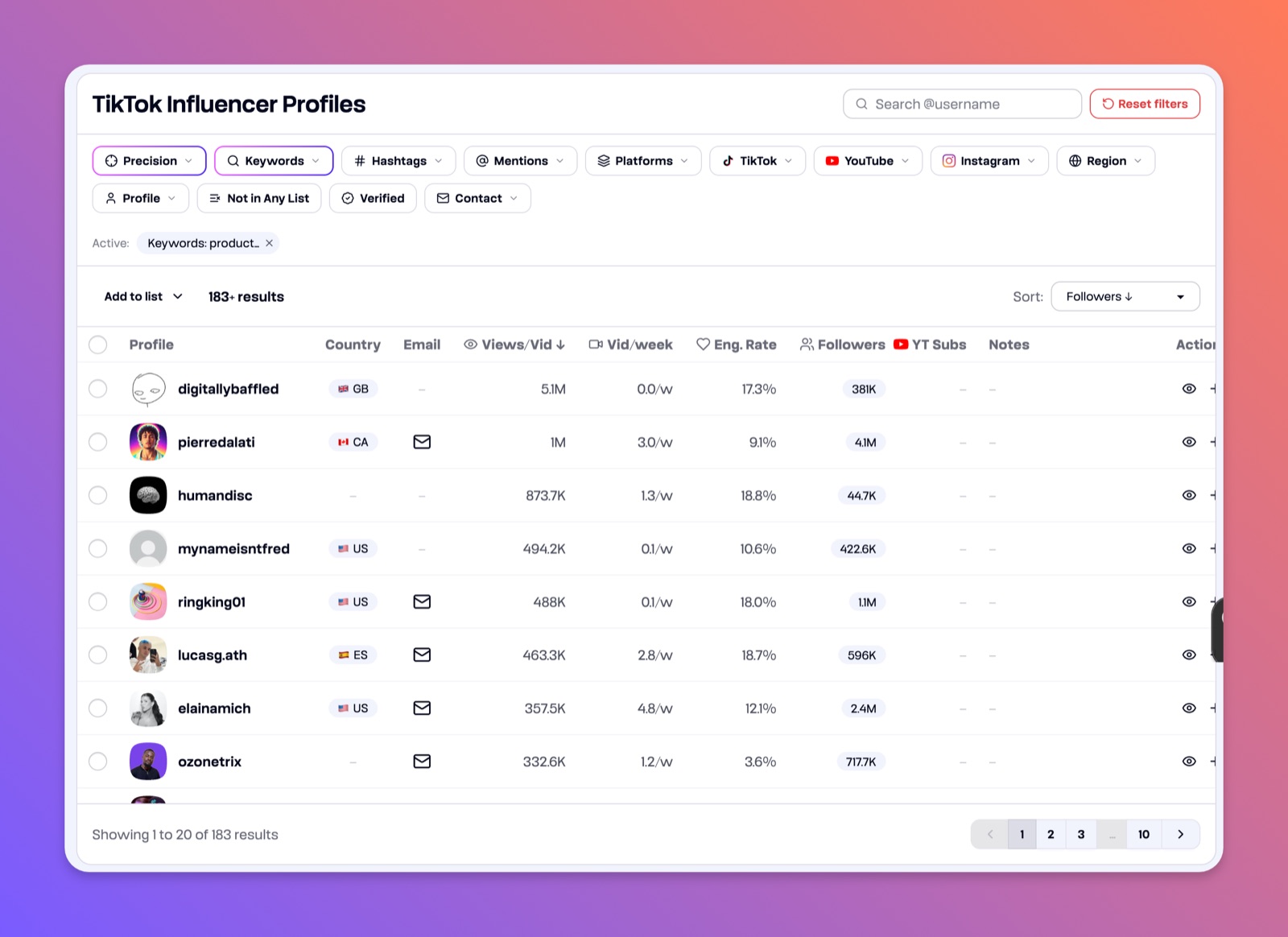
Filtering by engagement rate and contact email is what turns a longlist into a shortlist you can actually brief.
7-Point Sponsorship Post Comparison
| Title | Implementation Complexity 🔄 | Resource Requirements ⚡ | Expected Outcomes 📊 | Ideal Use Cases 💡 | Key Advantages ⭐ |
|---|---|---|---|---|---|
| Product Seeding & Unboxing Sponsorship Post | Low-Moderate; simple gifting workflow but limited message control | Product inventory, shipping logistics; low cash spend | High engagement and UGC; view-driven results; conversion variable | E‑commerce launches, visual products, micro-influencer seeding | ⭐⭐⭐⭐ Builds trust via authenticity; cost‑effective UGC |
| Discount Code & Affiliate Sponsorship Post | Moderate; tracking, fraud monitoring and creator coordination needed | Tracking infrastructure, affiliate payouts/commissions; integration with commerce | Measurable sales and ROI; direct conversion attribution | Performance campaigns, promos, SaaS trials, DTC sales | ⭐⭐⭐⭐ Pay-for-performance; clear attribution |
| Brand Collaboration & Co-Created Content Sponsorship Post | High; joint creative development, approvals, IP agreements | Higher budgets, longer timelines, cross-team resources | Premium bespoke content, strong engagement, long-term partnerships | Co‑designed products, flagship launches, brand repositioning | ⭐⭐⭐⭐⭐ Highest authenticity; differentiated creative assets |
| Sponsored Challenge & Hashtag Campaign Post | High; concepting, seeded virality, moderation and amplification required | Prize budgets, seed creator network, moderation tools | Massive UGC and reach if viral; outcomes unpredictable | Brand awareness drives, viral trends, community-building | ⭐⭐⭐⭐ Potential for exponential organic reach; low CPI when successful |
| Sponsored Educational/Tutorial Content Post | Moderate; needs expert creators and possible technical review | Product access, production time, potential review cycles | Evergreen educational value, high intent traffic, qualified leads | Complex products, SaaS onboarding, B2B/B2C education | ⭐⭐⭐⭐ High credibility; long‑term content value |
| Authentic Testimonial & User Experience Sponsorship Post | Moderate-High; requires genuine usage period and creator vulnerability | Time for results, careful creator selection; minimal production cost | Strong emotional resonance and consideration; effective for transformations | Fitness, wellness, finance, outcomes-driven products | ⭐⭐⭐⭐⭐ Very high perceived authenticity and trust |
| Behind-the-Scenes & Brand Story Sponsorship Post | High; coordinating access, sensitive info boundaries, ongoing collaboration | Brand time and access, multi-part production, editorial oversight | Improved brand affinity and loyalty; slower direct conversions | Mission-driven brands, transparency campaigns, employer branding | ⭐⭐⭐⭐ Humanizes brand; builds long‑term emotional connection |
Turn Inspiration Into a Repeatable Sponsorship System
The right sponsorship social media post depends on the campaign objective, not the format currently receiving the most attention. Choose product seeding and unboxing when discovery and first contact matter. Use discount codes and affiliate posts when the team needs attributable sales or signups. Select co-created content when the creator's creative contribution is part of the partnership value.
A sponsored challenge fits participation and user-generated content, but only when the action is simple and relevant to the product. Choose educational tutorials when the audience needs help understanding a workflow or category. Use testimonials when trust and lived experience drive evaluation, with careful controls around personal claims. Choose behind-the-scenes storytelling when the brand has a process, people, or origin story that can reward deeper attention.
Before publication, confirm the operating details:
- Creator-content fit: Does the creator already make this format for an audience that cares about the problem?
- Caption and CTA clarity: Can viewers identify the recommendation and next action without decoding the post?
- Visible disclosure: Is the paid relationship clear in the content and caption, not hidden below the fold?
- Usage rights: Can the brand reuse the content in the intended channels and time period?
- Approval boundaries: Which claims, visuals, and confidential details require review?
- Tracking setup: Are post-level views, clicks, codes, conversions, comments, and cost-per-view connected to the campaign?
- Post-campaign review: Will the team document creative patterns, audience objections, and repeatable creator traits?
Disclosure shouldn't be treated as a binary switch with a guaranteed negative result. A 2025 meta-analysis of 288 effect sizes found that disclosure increased persuasion knowledge and brand recall while reducing credibility, with overall effects on attitude and purchase intent often insignificant (Marketing Letters summary). The same analysis found that clarity, length, video use, and who delivers the disclosure can change the outcome. Other 2025 research reported that an official sponsorship announcement on Douyin increased likes and comments, while disclosure could prevent attitude deterioration when sponsorship became obvious, particularly where creator-brand fit was low (J-STAGE research article).
Tokfluence can connect the workflow from content-first creator discovery and audience validation to verified outreach, CSV exports, and post-level campaign measurement. Teams can use those inputs to build a repeatable system rather than treating every sponsored post as a one-off creative gamble.
Use Tokfluence to discover TikTok creators through content and audience signals, validate fit with audience reports, and organize verified outreach for sponsored partnerships. Start building your shortlist and tracking the resulting posts in one workflow so the next campaign improves on the last one.